Your Cart is Empty


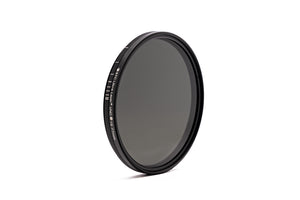
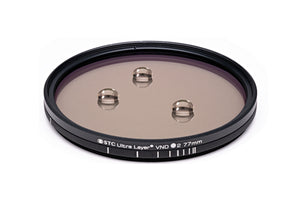
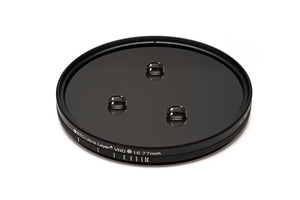
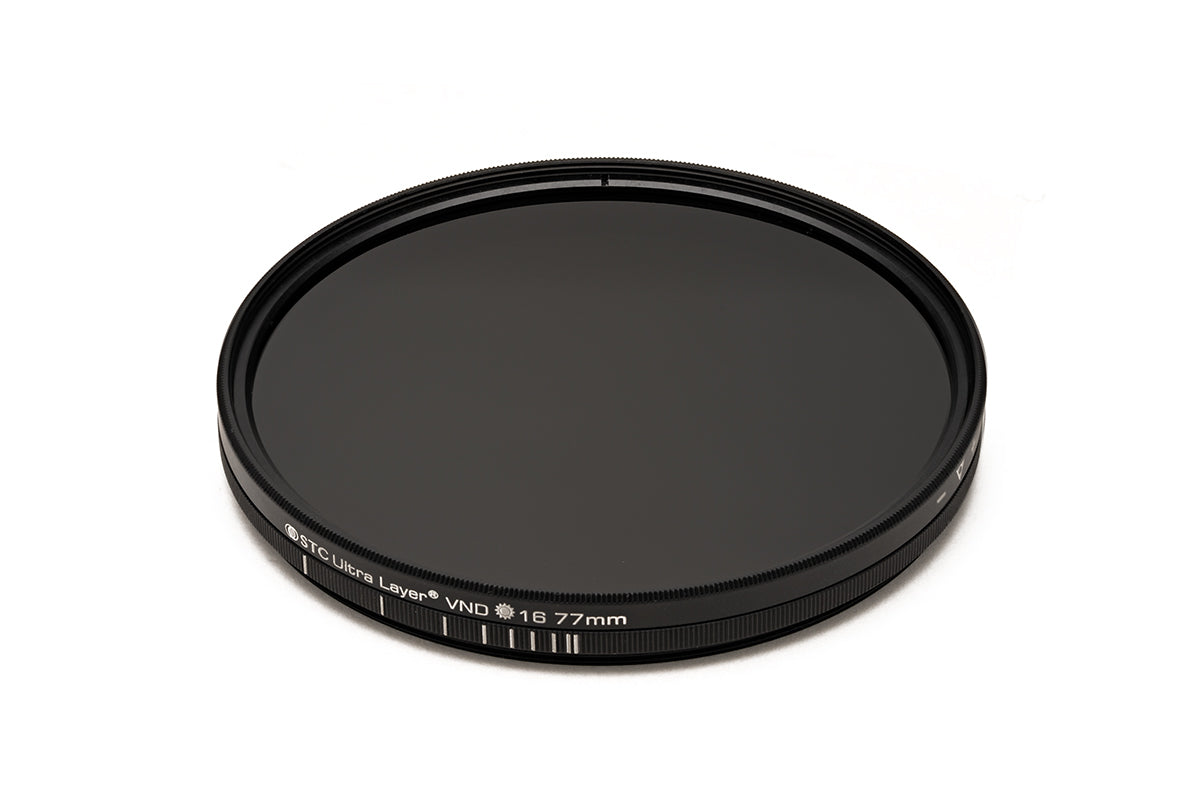
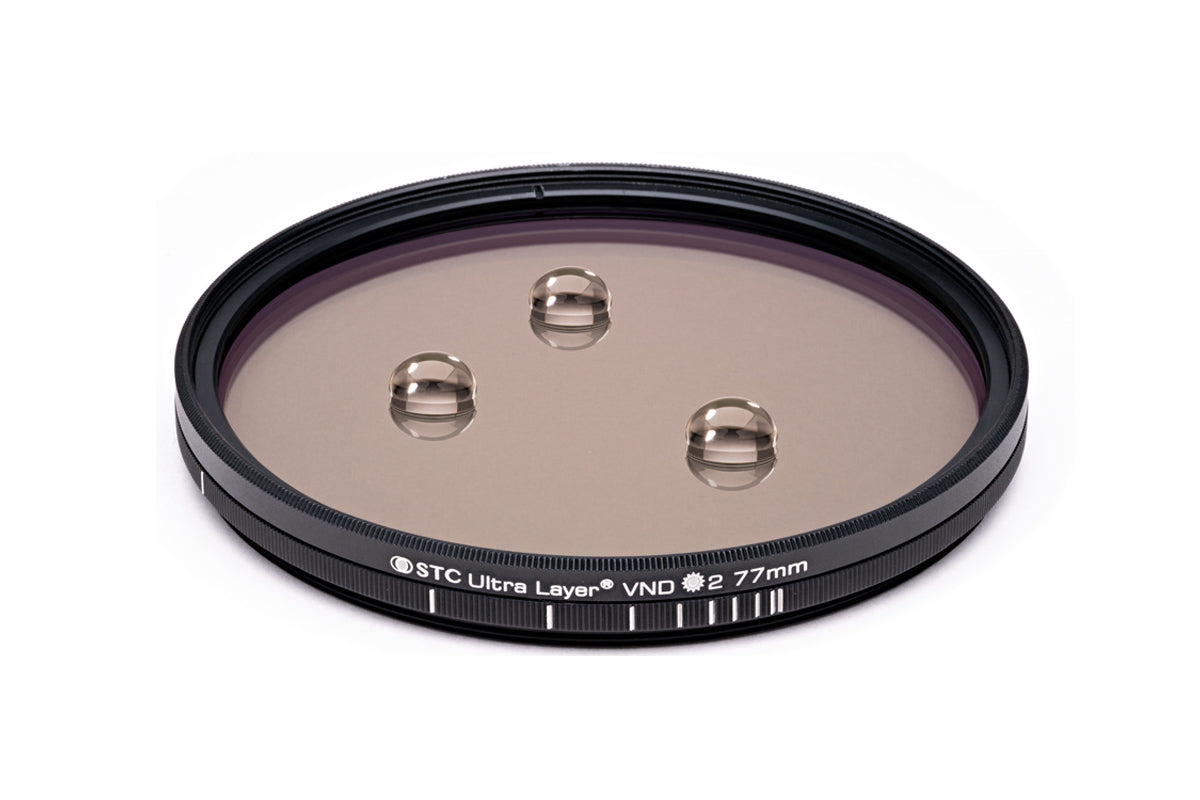
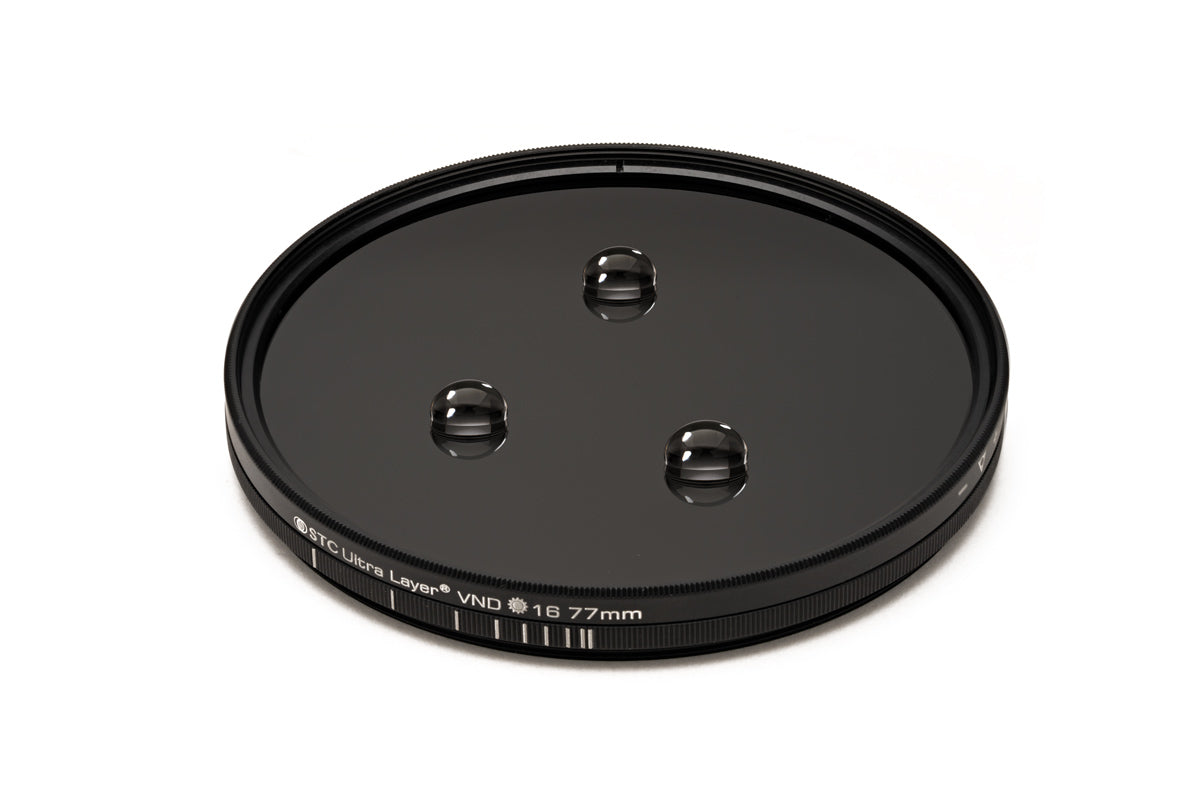
Unlike other variable ND filters, STC's patented variable ND filter is continuous.
A good neutral density (ND) filter solves the problem of overexposure in bright conditions with large aperture lenses and slow shutter speeds by dimming the incoming light evenly across the spectrum. STC's Variable ND Filter helps you find the right dimming coefficient for the perfect soft focus effect in a shallow depth of field, or to capture moving water, flows of traffic, and people with a slow shutter speed.
Features
Frequently Asked Questions
What is the difference between ND2-1024 and ND16-4096?
The ND2-1024 covers a lower range of light reduction (1–10 stops), suitable for moderate lighting conditions. The ND16-4096 covers a higher range (4–12 stops), ideal for very bright conditions or when you need more dramatic motion blur effects.
What thread sizes are available?
Available in 58mm, 62mm, 67mm, 72mm, 77mm, and 82mm.
What is a continuous variable ND filter?
Unlike stepped ND filters, STC's patented VND filter allows you to smoothly and continuously adjust the light reduction level by rotating the outer ring, giving you precise exposure control without swapping filters.
Will this filter cause vignetting?
The super slim 9.65mm aluminum ring is designed to minimize vignetting, though some vignetting may occur at extreme wide-angle focal lengths.
Is this filter covered by a warranty?
Yes. STC offers the world's first warranty and repair service for filters, covering this filter against manufacturing defects.

The filter works by rotating and overlapping two linear polarizers with diffraction grating. A large overlap can produce issues of cross patterns and color blocks, an unavoidable physical attribute of diffraction grating. But smaller angle overlapping positions, or the use of a long focal length lens, delay cross patterns’ appearance.


旹The test result used Canon 16-35mm lens and 24-70mm lens shooting on 40W / 5700K LED board. It's just for reference on the grounds that different lens optical structures and the angle of environmental incident light would affect the appearance timing of the X pattern.